Sunday, July 19, 2009

Apollo 7

Apollo 7 (October 11-22, 1968) was the first manned mission in the Apollo program to be launched. It was an eleven-day Earth-orbital mission, the first manned launch of the Saturn IB launch vehicle, and the first three-person American space mission. The flight was an open-ended flight which meant that the mission would continue as long as it was safe and there were enough consumables on board, including oxygen. It flew low around the earth so it could track life-support systems, the propulsion systems and the control systems.

Mission highlights

Apollo 7 was a test flight, and confidence-builder. After the January 1967 Apollo launch pad fire, the Apollo command module had been extensively redesigned. Schirra, who would be the only astronaut to fly Mercury, Gemini and Apollo missions, commanded this Earth-orbital shakedown of the command and service modules. Since it was not carrying a lunar module, Apollo 7 could be launched with the Saturn IB booster rather than the much larger and more powerful Saturn V. Schirra wanted to give Apollo 7 the callsign "Phoenix" (the mythical bird rising from its own ashes) in memory of the loss of the Apollo 1 crew, but NASA management was against the idea.

Even though Apollo's larger cabin was more comfortable than Gemini's, eleven days in orbit took its toll on the astronauts. Tension with Commander Schirra began with the launch decision, when flight managers decided to launch with a less than ideal abort option for the early part of the ascent. Once in orbit, the spacious cabin may have induced some crew motion sickness, which had not been an issue in the earlier, smaller spacecraft. The crew also found the food to be bad. But the worst problem occurred when Schirra developed a bad head cold. As a result, he became irritable with requests from Mission Control and all three began "talking back" to the Capcom. An early example was this exchange after Mission Control requested that a TV camera be turned on in the spacecraft:

Walter Schirra looks out the rendezvous window in front of the commander's station on the ninth day of the mission.SCHIRRA: You've added two burns to this flight schedule, and you've added a urine water dump; and we have a new vehicle up here, and I can tell you this point TV will be delayed without any further discussion until after the rendezvous.

CAPCOM: Roger. Copy.
SCHIRRA: Roger.
CAPCOM: Apollo 7 This is CAP COM number 1.
SCHIRRA: Roger.
CAPCOM: All we've agreed to do on this is flip it.
SCHIRRA: ... with two commanders, Apollo 7
CAPCOM: All we have agreed to on this particular pass is to flip the switch on. No other activity is associated with TV; I think we are still obligated to do that.
SCHIRRA: We do not have the equipment out; we have not had an opportunity to follow setting; we have not eaten at this point. At this point, I have a cold. I refuse to foul up our time lines this way.

Exchanges such as this would lead to the crew members being passed over for future missions. But the mission successfully proved the space-worthiness of the basic Apollo vehicle, and led directly to the bold decision to launch Apollo 8 to the moon two months later.

Beyond a shakedown of the spacecraft, goals for the mission included the first live television broadcast from an American spacecraft (Gordon Cooper had broadcast slow scan television pictures from Faith 7 in 1963) and testing the lunar module docking maneuver with the launch vehicle's discarded upper stage.

Apollo 7 was the only manned Apollo launch to take place from Cape Canaveral Air Force Station's Launch Complex 34, as all subsequent Apollo (including Apollo-Soyuz) and Skylab missions were launched from Launch Complex 39 at the nearby Kennedy Space Center.

As of 2009, Cunningham is the only surviving member of the crew. Eisele died in 1987 and Schirra in 2007.

Apollo 6

Apollo 6, launched on April 4, 1968, was the Apollo program's second and last unmanned test flight of its Saturn V launch vehicle.

Objectives

This was the final qualification flight of the Saturn V before its first manned flight (Apollo 8) (While Apollo 7 was the first manned Apollo mission, it used the smaller Saturn IB, not the Saturn V.) It was also the first mission to use High Bay 3in the Vertical Assembly Building (VAB), Mobile Launcher 2 and Firing Room 2. Another objective was testing the Command Module re-entry system under extreme conditions simulating a worst-case return from the Moon. This objective was not met due to J-2 engine failures.

Flight

Launch
Unlike the near perfect flight of Apollo 4, Apollo 6 experienced problems right from the start. Two minutes into the flight, the rocket experienced severe Pogo oscillations for about 30 seconds. George Mueller explained the cause to a congressional hearing:

Pogo arises fundamentally because you have thrust fluctuations in the engines. Those are normal characteristics of engines. All engines have what you might call noise in their output because the combustion is not quite uniform, so you have this fluctuation in thrust of the first stage as a normal characteristic of all engine burning.

Now, in turn, the engine is fed through a pipe that takes the fuel out of the tanks and feeds it into the engine. That pipe's length is something like an organ pipe so it has a certain resonance frequency of its own and it really turns out that it will oscillate just like an organ pipe does.

The structure of the vehicle is much like a tuning fork, so if you strike it right, it will oscillate up and down longitudinally. In a gross sense it is the interaction between the various frequencies that causes the vehicle to oscillate.

In part due to the pogo, the spacecraft adaptor that attached the CSM and mockup of the Lunar Module to the rocket started to have some structural problems. Airborne cameras recorded several pieces falling off it at T+133s.

After the first stage was jettisoned at the end of its task, the S-II second stage began to experience its own problems. Engine number two (of five) had performance problems from 206 to 319 seconds after liftoff and then at 412 seconds shut down altogether. Then two seconds later Engine Number Three shut down as well. The onboard computer was able to compensate and the stage burned for 58 seconds more than normal. Even so the S-IVB third stage also had to burn for 29 seconds longer than usual.

Cameras

Still from footage of Apollo 6's interstage falling away (NASA)Documentaries often use footage of a Saturn V launch, and one of the most used pieces shows the interstage between the first and second stages falling away. This footage is usually mistakenly attributed to the Apollo 11 mission, when it was actually filmed on the flights of Apollo 4 and Apollo 6.

A compilation of original NASA footage shows the jettisoning of the first stage (S-IC) and the interstage ring as seen from the bottom of the second stage (S-II), followed by the separation of the S-IVB third stage as seen from the top of the S-II. The hot, invisible hydrogen-oxygen flames of the J-2 engines on the S-II can be seen impinging on the S-IC and the ring. The S-II/S-IVB separation footage shows S-IVB ignition, and both films show the more conspicuous plumes of the solid lower stage retrorockets and upper stage ullage motors as they pull the stages apart.

The cameras filmed at high speeds causing an estimated 15 times slow-motion view of the sequence when seen in a documentary. The camera capsules were jettisoned soon after the first stage separation, and, though at about 200,000 feet in altitude, were still below orbital velocity. They then reentered the atmosphere and parachuted to the ocean, where they floated waiting for recovery. Only one of the two S-II cameras on Apollo 6 was recovered.

Another launch shot often attributed to Apollo 11 and other launches was shot on this day: it shows a view of the rocket lifting up, positioned relatively close up and dead center. The shot can be identified as Apollo 6 by examining the Apollo service module on the launch; Apollo 6 was the only Saturn V-launched Apollo craft with a white SM; all others were silver.

http://en.wikipedia.org/wiki/Apollo_6

Apollo 5

Apollo 5 was the first unmanned flight of the Apollo Lunar Module, which would later carry astronauts to the lunar surface. It lifted off on January 22, 1968.

Objectives

The Apollo 5 mission was intended to test the Lunar Module in a space environment, in particular its descent and ascent engine systems, and its ability to separate the ascent and descent stages. The descent engine would become the first throttleable rocket engine fired in space.

The mission was also intended to perform a "fire in the hole" test—as depicted in the mission's insignia—whereby the engine of the ascent stage would be fired whilst still attached to the descent stage. This would simulate the conditions experienced in an abort during descent to the lunar surface.

Flight

Lunar Module 1 during ground testing
Apollo 5's Saturn IB on the launchpadThe launch vehicle for Apollo 5 was the Saturn IB, a smaller rocket than the Saturn V but capable of launching an Apollo spacecraft into Earth orbit. The Saturn IB AS-204 that was used on Apollo 5 was the one originally intended for Apollo 1. It had been undamaged in the fire at Launch Complex 34 and was reassembled at Launch Complex 37B for the Apollo 5 launch.

The windows of LM-1 were replaced before the flight with solid aluminum plates. To shorten delivery time for the Lunar Module, it was decided to do without the module's legs. Without a crew or even a CSM, there was no need for the launch escape system. As a consequence the assembled rocket was only 55 meters tall.

On January 22, 1968, eight months after the planned launch date, Apollo 5 lifted off just before sunset. The Saturn IB worked perfectly, inserting the second stage and LM into a 163 x 222 km orbit. The Lunar Module separated 45 minutes later, and after two orbits started a planned 39 second burn of its descent engine. This was curtailed after four seconds by the onboard guidance computer, which detected that the engine's thrust was not building up rapidly enough. This was due to a software bug; the propellant tanks were only partially pressurized, and it took longer than the programmed four seconds to reach full acceleration.

The ground controllers moved to an alternate plan. They turned off the guidance computer and started an automatic sequence programmed into the onboard computer. This fired the descent engine two more times. It then performed the "fire in the hole" test and another ascent engine burn.

After four orbits the mission was over, and the two stages were left to fall into the Pacific several hundred kilometers southwest of Guam on February 12.

The Apollo 5 LM ascent stage (1968-007A) decayed January 24, 1968. The LM descent stage (1968-007B) decayed February 12, 1968.

Friday, July 17, 2009

Apollo 4

Apollo 4 was the first flight of the Saturn V launch vehicle, carrying no crew. It was also the first flight of the S-IC and S-II stages of the rocket.

Objectives

Early morning view on November 9, 1967.This was the first flight of the Saturn V, the largest launch vehicle ever to fly successfully. It was also the first launch from Launch Complex 39 specifically built for the Saturn V. As well as being the first launch of the S-IC first stage and S-II second stage, it would also be the first time that the S-IVB third stage had been restarted in Earth orbit and the first time that the Apollo spacecraft had reentered the Earth's atmosphere at speeds approaching those of a lunar return trajectory. Because of all these firsts there were 4,098 measuring instruments on board the rocket and spacecraft.

This would be the first test of the all-up doctrine. It had been decided in 1963 that instead of testing each component of the rocket separately as had been done by Wernher von Braun in Germany during World War II, the rocket would be tested all at once. This cut down the total number of tests, as needed to accomplish President Kennedy's stated goal of a manned lunar landing by 1970, but it meant that everything had to work properly the first time (as the Soviets found to their dismay with their Moon rocket). Apollo program managers had misgivings about all-up testing but agreed to it with some reluctance since individual component tests would inevitably push the landing mission past the 1970 goal.

There were two main payloads on board. CSM-017 was a production model of the spacecraft. It was a Block I design meant for systems testing, and not the Block II spacecraft that had the docking mechanisms necessary for landing on the Moon. However it did feature some Block II upgrades such as an improved heat shield and a new hatch. The other payload was LTA-10R which was a model of the Lunar Module carried as ballast but with the same mass distribution as the real craft.

Flight

The Saturn V of Apollo 4 rising from the launch pad.After a testing regime that lasted two months the rocket was finally ready for launch. The propellant started being loaded on 6 November. In total there were 89 trailer-truck loads of LOX (liquid oxygen), 28 trailer loads of LH2 (liquid hydrogen), and 27 rail cars of RP-1 (refined kerosene).

The five F-1 engines sent a huge amount of noise across Kennedy Space Center. To protect from a possible explosion, the launch pads at LC-39 were nearly four miles from the Vehicle Assembly Building. However, the noise was much stronger than expected and buffeted the Vehicle Assembly Building, firing room and press buildings. Ceiling tiles fell around Walter Cronkite in the CBS news booth. NASA later built a sound suppression system that pumps thousands of gallons of water onto the flame trench under the pad. A similar system is still used today with Space Shuttle launches.

The perfect launch placed the S-IVB and CSM into a 185 kilometer orbit. After two orbits, the S-IVB reignited for the first time, putting the spacecraft into an elliptical orbit with an apogee of more than 17,000 kilometers. The CSM separated from the S-IVB and fired its Service Propulsion System (SPS) engine to send it out to 18,000 kilometers. Passing apogee, the Service Propulsion System fired again to increase re-entry speed to 40,000 km/h, simulating a return from the moon.

The CM landed 16 km from the target landing site. Its descent was visible from the deck of the USS Bennington, the prime recovery vessel.

http://en.wikipedia.org/wiki/Apollo_4

Apollo 3


AS-202 (or SA-202) was a sub-orbital test flight of the Saturn IB and Command and Service Module. It is sometimes informally called Apollo 3.

Objectives

AS-202 was the second test flight of the Saturn IB. It was designed to test the rocket more than had been done on AS-201 by launching the rocket higher and having the flight lasting twice as long. It would also test the Command and Service Module (CSM-011) by having the engine firing four times during the flight.

The flight was also designed to test out the heat shield by subjecting it to 260 megajoules per square metre. Over the course of the reentry it generated equivalent energy needed to power Los Angeles for over one minute in 1966.

CSM-011 was basically a production model capable of carrying a crew. However it lacked the crew couches and some displays that would be included on later missions for the astronauts. This was the first flight of the guidance and navigation system as well as the fuel cell electrical system.

Flight

The last test flight the Saturn IB launched 25 August 1966 from Pad 34. The launch phase was perfectly nominal with the first stage burning for just under two and a half minutes lifting the rocket to 56 km in altitude and 56 km downrange from the launch pad. The second stage burned for a further seven and half minutes putting the spacecraft into a ballistic trajectory with a maximum altitude of 216 km.

The CSM was preprogrammed to make four burns of its Service Propulsion System (SPS). The first occurred a couple of seconds after separation from the S-IVB second stage. It burned for 3 minutes, 35 seconds lifting the spacecraft apogee to 1,128.6 km.

The second burn was 25 minutes later lasting one minute 28 seconds. Two more burns each of three seconds were done ten seconds later to test the rapid restart capabilities of the engine.

As well as testing the SPS, these burns accelerated the spacecraft for an 8900 meters per second reentry. The reentry was a roller coaster like ride, with the spacecraft first dipping down from 122,000 m to 66,000 m. It then lifted back up to 81,000 m. By this time it had shed 1,300 meter/second in speed. It then dipped down for the last time. The main parachutes deployed at 7250 meters in altitude. It splashed down 370 km from the target landing site and it took the USS Hornet 8 hours and 30 minutes to reach the capsule. The Apollo AS-202 command module landed at 16.12° N - 168.9° E.

http://en.wikipedia.org/wiki/AS-202

Apollo 2


AS-203 (or SA-203) was an unmanned flight Saturn IB launch vehicle. It is sometimes informally called Apollo 2.

Objectives

The main purpose of the AS-203 flight was to investigate the effects of weightlessness on the fuel in the S-IVB tank. The reason for this was that the S-IVB would be used by Apollo astronauts to boost them from Earth orbit to a trajectory towards the moon. Engineers wanted to see what the liquid hydrogen would do in the tank - settle in one place or maybe even slosh violently. The S-IVB tank was equipped with 83 sensors and two TV cameras to record what the fuel did.

Because this was an engineering flight, there was no Command Service Module (CSM). This was also the first flight of a new type of Instrument Unit that controlled the Saturn rockets during launch and the first launch of a Saturn IB from Pad 37B.

Flight

The rocket launched on the first attempt on July 5. The S-IVB and IU were inserted into a 188 km circular orbit.

It was found that the stage could restart and that the fuel behaved just as predicted. It was observed over four orbits and then the stage was pressurized to see how much stress it could stand. In the end this test exceeded the structural capabilities of the stage and it fragmented.

Despite the destruction of the stage, the mission was classified as a success, having achieved all of the mission objectives. In September Douglas Aircraft Company, who built the S-IVB, declared that the stage was operational and ready to send men to the Moon. Fragments of the first stage supposedly hit a German fishing vessel.

Apollo 1

40 Years ago, man touched the surface of a celestial body. How quickly time escapes us. I can only hope that my children get to see what I did not. Perhaps I will see it too. I know that man's curiosity with the heavens above will always be strong, but I fear that the sacrifice of those who have gone before us will deter us from taking the risks we must to reach beyond simple curiosity.

I will be posting some videos (if available) of the Apollo misions to remind us of how man's sacrifices can bring a people together to celebrate our very existence and the idea that we are ALIVE.....


Apollo 1 is the official name that was later given to the never-flown Apollo/Saturn 204 (AS-204) mission. Its command module (CM-012) was destroyed by fire during a test and training exercise on January 27, 1967 at Pad 34 (Launch Complex 34, Cape Canaveral, then known as Cape Kennedy) atop a Saturn IB rocket. The crew aboard were the astronauts selected for the first manned Apollo program mission: Command Pilot Virgil I. "Gus" Grissom, Senior Pilot Ed White and Pilot Roger B. Chaffee. All three died in the fire.

Although the ignition source of the fire was never conclusively identified, the astronauts' deaths were attributed to a wide range of lethal design hazards in the early Apollo command module. Among these were the use of a high-pressure 100 percent-oxygen atmosphere for the test, wiring and plumbing flaws, flammable materials in the cockpit (such as Velcro), an inward-opening hatch that would not open in this kind of an emergency and the flight suits worn by the astronauts.

Tragedy
Plugs-out test

At 1:00 PM (1800 GMT) on January 27 Grissom, White and Chaffee entered the command module fully suited, were strapped into their seats and hooked up to the spacecraft's systems in preparation for the plugs-out test. There were immediate problems. A sour "buttermilk" smell in the air circulating through Grissom's suit delayed the launch simulation until 2:42 PM. Three minutes later the hatch was sealed and high-pressure pure oxygen began replacing the air in the cabin.

Further problems included episodes of high oxygen flow apparently linked to movements by the astronauts in their flightsuits. There were also faulty communications between the crew, the control room, the operations and checkout building and the complex 34 blockhouse. "How are we going to get to the moon if we can't talk between three buildings?" Grissom complained in frustration over the communication loop. This put the launch simulation on hold again at 5:40. Most countdown functions had been successfully completed by 6:20 but the countdown was still holding at T minus 10 minutes at 6:30 with all cables and umbilicals still attached to the command module while attempts were made to fix the communication problem.

Fire

The crew members were reclining in their horizontal couches, running through a checklist when a voltage transient was recorded at 6:30:54 (23:30:54 GMT). Ten seconds later (at 6:31:04) Chaffee said, "Hey..." Scuffling sounds followed for three seconds before Grissom shouted "Fire!" Chaffee then reported, "We've got a fire in the cockpit," and White said "Fire in the cockpit!"

After nearly ten seconds of frenetic movement noises Chaffee yelled, "We've got a bad fire! Let's get out! We're burning up! We're on fire! Get us out of here!"[5][6] Some witnesses said they saw Ed White on the television monitors, reaching for the hatch release handle as flames in the cabin spread from left to right and licked the window. Only 17 seconds after the first indication by crew of any fire, the transmission ended abruptly at 6:31:21 with a scream of pain as the cabin ruptured after rapidly expanding gases from the fire overpressurized the CM to 29 psi.[7]

Intense heat, dense toxic smoke and malfunctioning gas masks hampered the ground crew's rescue efforts. There were fears the fire might ignite the solid fuel rockets in the launch escape tower above the command module, likely killing nearby ground personnel. It took five minutes to open the inner and outer hatches, a set of three with many ratchets. By this time the fire in the command module had gone out. Although the cabin lights remained lit the ground crew was at first unable to find the astronauts. As the smoke cleared they found the bodies but were not able to remove them. The fire had partly melted the astronauts' nylon space suits and the hoses connecting them to the life support system. Grissom's body was found lying mostly on the deck. His and White's suits were fused together. The body of Ed White (who mission protocol had tasked with opening the hatch) was lying back in his center couch. White would not have been able to open the inward-opening hatch against the internal pressure. Chaffee's job was to shut down the spacecraft systems and maintain communications with ground control. His body was still strapped into the right-hand seat.

STS-127 Launch HD

Thursday, June 25, 2009

BACK TO THE MOON!!!

Youth Has its Benefits. . . Even on Mars!

April 29, 2009

Opportunity has seen many sights during her nearly 2000 sols on Mars, but recently came face-to-face (or wheel-to-rock) with the youngest crater ever seen by either Mars Exploration Rover!


Scientists say this small crater called "Resolution" formed sometime in the past 100,000 years. Most features studied by Opportunity are much older, including rocks over 3 billion years old! In contrast to these seniors, Resolution is just a baby.

Unlike a baby's soft skin, a newborn crater starts out sharp, and only softens over time. As craters age, the "sandblasting" action of the Martian wind erodes rocks ejected during crater formation and fills its bowl with sand. Signs of this crater's youth are fresh rocks on the crater rim and an empty bowl. The newer crater also drapes over older surrounding dunes. Finding youth pays off: scientists can compare Resolution to older craters to learn how fast wind changes the Martian surface over time.

Credit for image: Opportunity Rover, portion of Navcam mosaic (Sol 1825; PIA 1185).
Image credit: NASA/JPL-Caltech

Article courtesy of http://marsrovers.jpl.nasa.gov/spotlight/20090429.html

Thursday, June 18, 2009

In Orbit Above the Moon

Make sure you watch in High Def and full screen.


Tuesday, May 5, 2009

“It’s cold”..."f***ing cold"

The Daily Show With Jon StewartM - Th 11p / 10c
Large Hadron Collider
thedailyshow.com
Daily Show
Full Episodes
Economic CrisisPolitical Humor

You gotta love the media. They seem to be ambulance chasing. If it is not one thing it is another. I believe that the news media that is being delivered to our homes is no better than advertisements for specific viewpoints. The news has become unwatchable. I do not need a police blotter delivered to my home every hour on the hour. Are there no good things happening. Sure, but you got to wait until the last 15 sec of an hour long newscast. Hardly balanced. A good example of this crazy fucked up issue is the latest SWINE FLU. It didn't even come from a pig. How many people got sick? How many people died? Now tell me this, how many people will get into automobile accidents and get injured? How many will die? Is this not a pandemic? Would those persons not been injured or killed if there were no automobiles? I know, apples to oranges, but the facts are in the data. There is no disputing the data. The H1N1 or whatever you call it is not a matter of emergency. Is it

Sorry to say that I have officially stopped watching the news/media that is given to me daily because of the incompetent reporting that is going on and the overhype on the wrong topics/issues. Bring on news from TDS - calling a spade a spade....

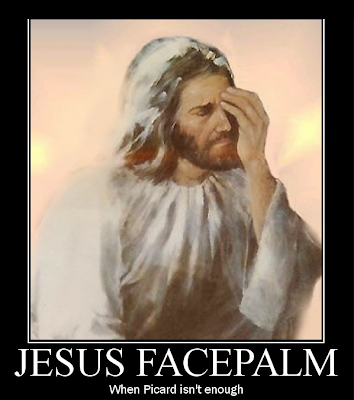
Even Jesus is dissapointed....

Thursday, April 23, 2009

Crater


Crater is a constellation. Its name is Latin for cup, and in Greek mythology it is identified with the cup of the god Apollo. It was one of the 48 constellations listed by the 1st century astronomer Ptolemy, and remains one of the 88 modern constellations. It is faint, with no star brighter than fourth magnitude.

Deep sky objects

NGC 3511 is a spiral galaxy with a slight bar, seen nearly from the edge, of type SBbc. It is a member of the galaxy cluster Abell 1060. This galaxy is magnitude 12, and is 4' × 1' in size.
NGC 3887 is a barred-spiral of type SBc, magnitude 11, with a diameter of 3.5'.
NGC 3981 is a spiral galaxy with two wide spiral arms, of type SBbc. It is magnitude 12 with a diameter of 3'. This galaxy was discovered by William Herschel in 1785.

Mythology

Crater is identified with a story from Greek mythology in which a crow or raven serves Apollo, and is sent to fetch water, but it rests lazily on the journey, and after finally obtaining the water in a cup, takes back a water snake as well, as an excuse. According to the myth, Apollo saw through the fraud, and angrily cast the crow, cup, and snake, into the sky. The constellations of Corvus the crow and Hydra the water-snake are also identified with this myth.

http://en.wikipedia.org/wiki/Crater_(constellation)

Chamaeleon


Chamaeleon is a small constellation in the southern sky. It is named after the chameleon, a form of lizard. It was first defined in the sixteenth century. In Australia it is sometimes unofficially called "the Frying Pan" when finding the south by the stars.

History

Chamaeleon was one of twelve constellations created by Petrus Plancius from the observations of Pieter Dirkszoon Keyser and Frederick de Houtman. It first appeared on a 35-cm diameter celestial globe published in 1597 (or 1598) in Amsterdam by Plancius and Jodocus Hondius. The first depiction of this constellation in a celestial atlas was in Johann Bayer's Uranometria of 1603.

Notable features

In 1999, a nearby open cluster was discovered centered on the star η Chamaeleontis. The cluster, known as either the Eta Chamaeleontis cluster or Mamajek 1, is 8 million years old, and lies 316 light years from Earth.

The constellation contains a number of molecular clouds (the Chamaeleon dark clouds) that are forming low-mass T Tauri stars. The cloud complex lies some 400 to 600 light years from Earth, and contains tens of thousands of solar masses of gas and dust. The most prominent cluster of T Tauri stars and young B-type stars are in the Chamaeleon I cloud, and are associated with the reflection nebula IC 2631.

http://en.wikipedia.org/wiki/Chamaeleon

Antlia


Antlia from Ancient Greek is a constellation in the southern sky. Its name means "pump" and it specifically represents an air pump. The stars comprising Antlia are faint, and the constellation was not created until the eighteenth century. Beginning at the north, Antlia is bordered by Hydra the sea snake, Pyxis the compass, Vela the sails, and Centaurus the centaur.

History

Antlia was created by the French astronomer Abbé Nicolas Louis de Lacaille, who created fourteen constellations for the southern sky to fill some faint regions. It was originally denominated Antlia pneumatica to commemorate the air pump invented by the French physicist Denis Papin. The International Astronomical Union subsequently adopted it as one of the 88 modern constellations. There is no mythology attached to Antlia as Lacaille discontinued the tradition of giving names from mythology to constellations and instead chose names mostly from scientific instruments. This constellation has not 3, but 4 main stars.

Notable features

Antlia is devoid of bright stars. The brightest star is α Antliae, a magnitude 4.25m orange giant. Antlia contains the following deep sky objects:

NGC 2997, a spiral galaxy of type Sc which is inclined 45° to our line of sight.
NGC 3132, a planetary nebula, also called the Eight-burst Nebula or Southern Ring Nebula. At its heart is a binary star system.
The Antlia Dwarf, a 14.8m dwarf spheroidal galaxy that belongs to our Local Group of galaxies. It was discovered only as recently as 1997.

http://en.wikipedia.org/wiki/Antlia

Wednesday, April 15, 2009

Volans


Volans is a constellation in the southern sky. It represents a flying fish; its name is a shortened form of its original name, Piscis Volans. Volans was one of twelve constellations created by Petrus Plancius from the observations of Pieter Dirkszoon Keyser and Frederick de Houtman and it first appeared on a 35-cm diameter celestial globe published in 1597 (or 1598) in Amsterdam by Plancius with Jodocus Hondius. The first depiction of this constellation in a celestial atlas was in Johann Bayer's Uranometria of 1603.

http://en.wikipedia.org/wiki/Volans

Wednesday, April 1, 2009

April 1


I find this a very simple explanation of the co-dependence earth has on the sun and how fragile the give and take balance really is. How lucky we are to be alive today. How lucky we are that life started out here at all. We are blessed to have the star we orbit. There are some things to be said about consistency and comfort...

From 365 Starry Nights.

"In sandy soil at the side of the road the fiddlehead ferns unroll their sun-catching fronds. It is truly spring, and the sun moves northward on its long arc. Every second the sun converts 657 million tons of hydrogen into 653 million tons of helium by a process called nuclear fusion. The missing 4 million tons of mass are converted into energy and hurled into space as heat and light.

The earth intercepts only about one two-billionth of this energy, or about 4 pounds worth of the vanished matter. The sun never misses so tiny a fraction of its huge bulk, but to the earth that 4 pounds worth of energy every second is the difference between day and night. It is also the difference between death and life.

In its journey around the sun, the earth leans into its curve like a sailor bracing against the wind. In April we begin to lean toward the sun. The sun climbs higher and higher into the sky. Its rays hit the earth's surface more directly in the northern hemisphere and the earth responds. In the summer, about a millionth of an ounce of the sun's mass falls every second at my location; in the winter less that half as much. A fraction of a millionth of an ounce of the sun's depleated mass is all it takes to tip the balance of the season back toward winter or forward to spring.

The sun, as always, goes on turning hydrogen into helium. We lean up toward the sun, tired of winter, greedy for our share of the missing 4 million tons."


If you are interessted, there are some great videos on my "Look Up!" blog showing our sun and earth and moon from completely different perspectives. I encourage all to take a look.

Good night for now and may spring provide for you a sense of re-birth.

Monday, March 30, 2009

Saturday, March 28, 2009

Welcome home STS-119


Discovery touched down on Runway 15 at NASA's Kennedy Space Center, completing the 13-day, 5.3-million mile journey on the STS-119 mission. Discovery delivered the final pair of power-generating solar array wings and the S6 truss segment. The mission was the 28th flight to the station, the 36th flight of Discovery and the 125th in the Space Shuttle Program, as well as the 70th landing at Kennedy.

Image Credit: NASA/Kim Shiflett

http://www.nasa.gov/multimedia/imagegallery/image_feature_1316.html